
 English
 русский
 Español
 عربى
 简体中文
Reel Pin Terminal Strips Keep Automatic Crimping Consistent
Reel Pin Terminal supply changes how a harness line runs, because the terminals arrive as a continuous strip on a reel instead of a bag of loose pieces. Automotive, motorcycle, and new energy vehicle harnesses carry hundreds of crimped contacts, and each contact has to be crimped consistently. Feeding every Reel Pin Terminal from a reel is one way a harness line maintains a steady process while keeping production moving.
The Strip Carries Every Terminal In The Same Position
A reeled terminal is stamped and plated as part of a strip. A thin carrier band joins the terminals at a fixed spacing, called the pitch, and the strip is wound onto a reel. Each Reel Pin Terminal reaches the crimping station in a set orientation, with the barrel and pin aligned for the applicator.
The crimping machine pulls the strip through an applicator. The applicator separates one terminal from the carrier, places it over the stripped wire, and closes the crimp before advancing the strip to the next terminal. Since the terminals are held in position on the carrier, the operator does not need to pick each piece from a pile and align it by hand. A Reel Pin Terminal strip also allows the machine to track the feed, and each Reel Pin Terminal remains aligned on the carrier, helping operators plan a reel change before the material runs out.
Crimp Height Depends On Consistent Feeding
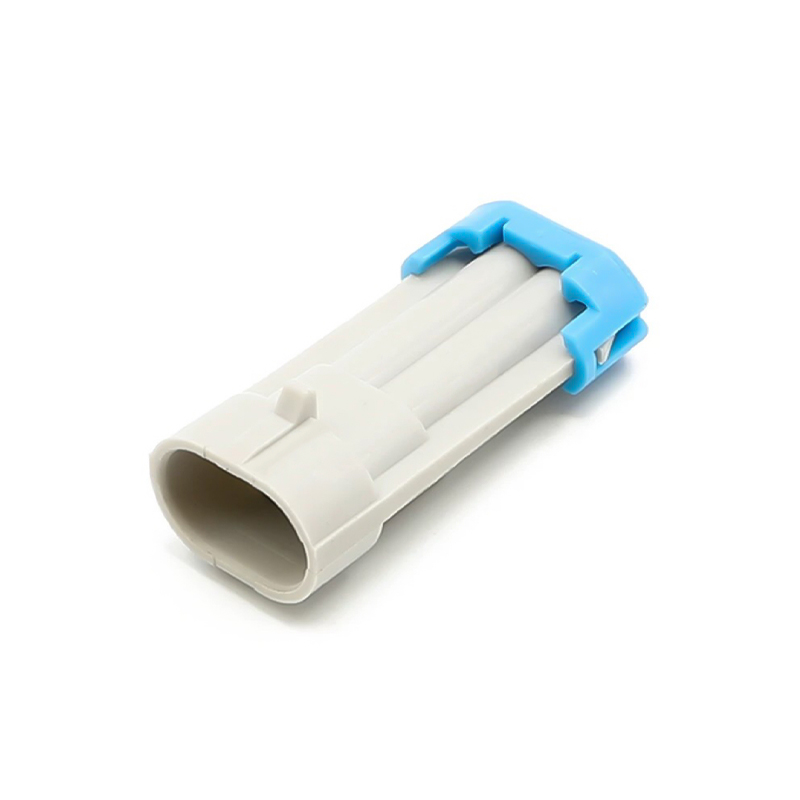
A crimp is defined mainly by its height, the dimension of the compressed barrel after the tooling closes. The height is set for each combination of terminal and wire size. When the wire-to-terminal joint meets the specified range, it can provide the required mechanical strength and electrical connection. A Crimp Terminal presented at a consistent position gives the applicator a more repeatable starting point for each stroke.
Steady feeding supports process consistency, but it is only one part of crimp control. Harness plants check crimp height through periodic measurements and confirm pull strength with sample tests. With a reeled Reel Pin Terminal, the carrier strip helps present each terminal in a consistent position throughout the run. The applicator, tooling condition, wire size, and terminal dimensions still affect the final crimp.
Loose Pieces Still Have A Place
Loose terminals poured into a bag remain a common format for repairs, prototypes, and small batches. They suit bench tools and semi-manual work, where changing the setup for each part is part of the job. Lizone's terminal range includes both reeled and loose-piece Crimp Terminal formats, giving harness plants a choice based on production volume and equipment.
At higher volumes, the balance shifts. Reeled terminals reduce handling because the strip is loaded once and feeds through the applicator until the reel ends. A Reel Pin Terminal reel can also reduce stops for refilling hoppers, while the number of terminals on each reel helps line planners estimate when a changeover will be needed.
Tin Plating Matters During Storage And Use
The terminal surface matters from the day the strip is stamped. Tin plating provides corrosion resistance and supports electrical contact performance over time, which is why tin is commonly used on terminals for vehicle applications. Lizone's Crimp Terminal information also refers to load capacity and stability at high temperatures, properties relevant to wiring locations near engines and batteries.
Plating also affects how reels are stored. Strips are generally kept in sealed packaging and protected from humidity so the surface reaches the applicator in suitable condition. Keeping the reel properly packed and handling it carefully can also reduce the risk of scratches, contamination, or bent pins before crimping.
Dies Set The Quality Of The Strip
Everything about a reeled terminal starts with the stamping die. The die cuts the terminal profile, forms the barrel, and maintains the pitch of the carrier strip. If the pitch shifts beyond the applicator's tolerance, the strip may not feed correctly and production can stop. Die precision therefore affects how reliably a Reel Pin Terminal runs on the line.
Wenzhou Lizone Connector Co., Ltd., in Yueqing, has 20 years of experience in new product development and precision mold manufacturing, and works with domestic automotive harness factories. Products can be developed from drawings or samples, with dimensions adapted to fit specific connector housings. For a Reel Pin Terminal, the die and stamping process need to maintain the pitch, barrel, and pin dimensions across the reel. Consistency in these details helps the terminals pass through the applicator and supports repeatable crimping from the piece to the last.