
 English
 русский
 Español
 عربى
عربى 简体中文
简体中文Industry News
Home / News / Industry News / What Should Buyers Verify Before Ordering an Electronic Terminal Block?
A procurement team sourcing terminal blocks for a new equipment line often treats them as a commodity item, assuming one supplier's part is interchangeable with another's. That assumption holds up less often than buyers expect. An Electronic Terminal Block sits at a connection point that carries real mechanical and thermal stress over an equipment's service life, and the details that separate a reliable supplier from a risky one rarely show up on a basic spec sheet.
Housing material on an Electronic Terminal Block affects both durability and fire safety rating, and buyers comparing quotes purely on unit price often miss that a lower-cost option uses a different, less heat-resistant plastic grade than a premium alternative. Suppliers should be able to specify the exact resin used and its flammability rating, since this detail matters for buyers whose end equipment needs to pass safety certification in the destination market. A RoHS compliant terminal confirms the absence of restricted substances, but flammability rating is a separate specification that buyers need to request independently.
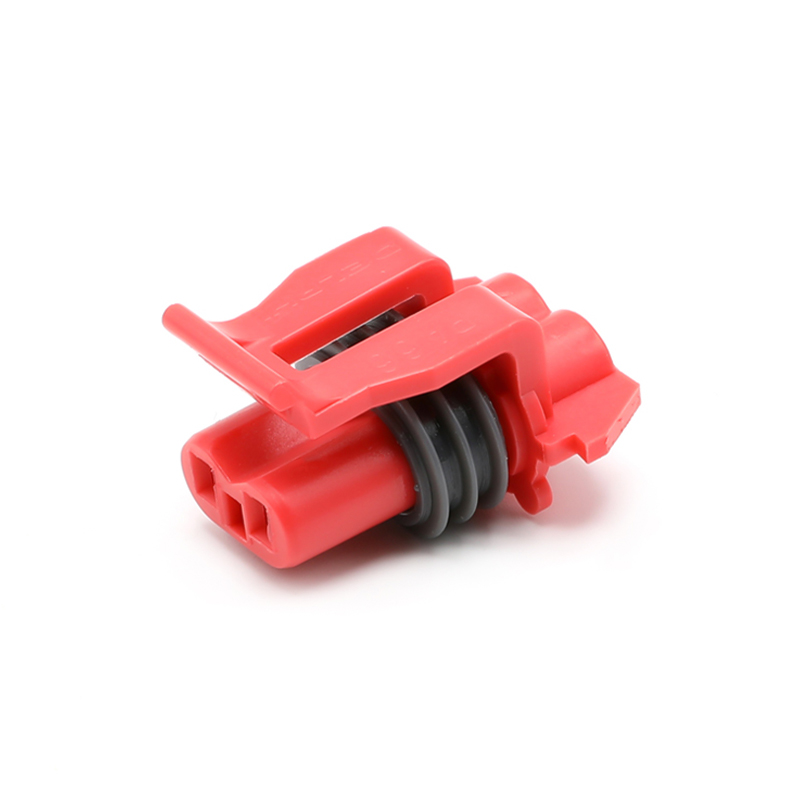
Suppliers frequently market terminal block components as interchangeable with existing systems, but buyers should verify this claim against actual dimensional tolerances rather than accepting it at face value. A component that fits visually during a quick sample check can still create a loose connection under vibration if contact pressure tolerances differ slightly from the original part. Requesting a dimensional tolerance report alongside the sample helps buyers confirm interchangeability claims for an Electronic Terminal Block before committing to a bulk order that assumes drop-in compatibility with an existing product line.
|
Sourcing Question |
Why It Matters |
|
What exact resin grade is used in the housing? |
Affects flammability rating and heat tolerance |
|
What dimensional tolerances apply to mating components? |
Determines true interchangeability with existing systems |
|
Is RoHS documentation batch-specific or company-wide? |
Batch-specific records reduce compliance risk |
|
What is the rated temperature range for continuous use? |
Affects suitability for high-heat installation locations |
|
Are rubber seals or grommets tested for compression set? |
Determines long-term sealing reliability |
An Electronic Terminal Block often pairs with a separate rubber seal or cable bushing grommet to maintain environmental protection at the wire entry point, and buyers should evaluate this component's aging performance independently from the terminal block itself. A grommet that hardens or shrinks after temperature cycling creates a sealing gap even if the terminal block housing remains structurally sound, so buyers should request compression-set test data covering the grommet material specifically rather than assuming the terminal block's general durability rating extends to the sealing components around it.
Buyers importing custom connector components including an Electronic Terminal Block for regulated industries should request ISO 9001 quality management system certification covering the specific production facility, along with SGS testing reports where material composition or mechanical performance needs third-party verification. Confirming that certification documents apply to the exact product line under quote — not a general company certificate covering unrelated components — reduces the risk of a compliance gap surfacing during a customs inspection or end-customer audit after the order has shipped.
Buyers requesting non-standard pin spacing, mounting orientation, or wire sleeve protection integrated into an Electronic Terminal Block assembly should clarify early whether the request uses existing tooling or requires new mold development, since the answer significantly affects both time and order quantity. Suppliers running modular tooling across their connector components line can often accommodate moderate customization without a full retool, but buyers should confirm this directly rather than assuming flexibility based on a general "customization available" claim in marketing materials. Requesting a pre-production sample tested under actual mating and environmental conditions remains a reliable way to confirm a component performs as specified before a full container order is placed.