
 English
 русский
 Español
 عربى
عربى 简体中文
简体中文1.0mm Pitch Connector Supports The Push Toward Smaller PCBs
Electronic devices continue to become smaller while packing more functions into limited internal space. This shift is visible in consumer electronics, industrial controls, communication equipment, and other compact systems where circuit boards need to accommodate more connections without increasing their overall footprint. As PCB layouts become denser, connector pitch has become an important part of this miniaturization process.
The 1.0mm Pitch Connector sits within this development. Its contact spacing provides more connection positions within a limited board area than larger-pitch alternatives, making it suitable for applications where space around the PCB is increasingly restricted.
Smaller Pitch Creates More Layout Options
Connector pitch determines the distance between adjacent contacts. Moving from a larger pitch to 1.0mm can create additional room for routing and component placement, particularly when several connectors are positioned close together on the same board.
This is one reason the 1.0mm Pitch Connector has gained attention in compact PCB assemblies. A smaller connector footprint can help engineers preserve board space for processors, sensors, power components, and other functional parts.
The benefit, however, comes with tighter dimensional requirements. As contacts move closer together, even a small deviation in terminal position can affect mating or create problems during automated assembly. Connector miniaturization therefore depends heavily on manufacturing precision.
Terminal Accuracy Becomes More Important
The contact terminals inside a 1.0mm Pitch Connector need to maintain consistent spacing while providing reliable electrical contact after repeated mating cycles. Their dimensions, plating, spring characteristics, and position within the housing all influence performance.
The terminal material must also support the mechanical requirements of insertion and removal. At the same time, its conductive properties need to remain stable during operation. Surface plating is commonly used to improve contact performance and resistance to oxidation.
For compact connectors, these details leave less room for manufacturing variation. Stamping accuracy, terminal forming, plating consistency, and inspection all become closely connected to the final connector's reliability.
Insulation Housing Requires Tight Control
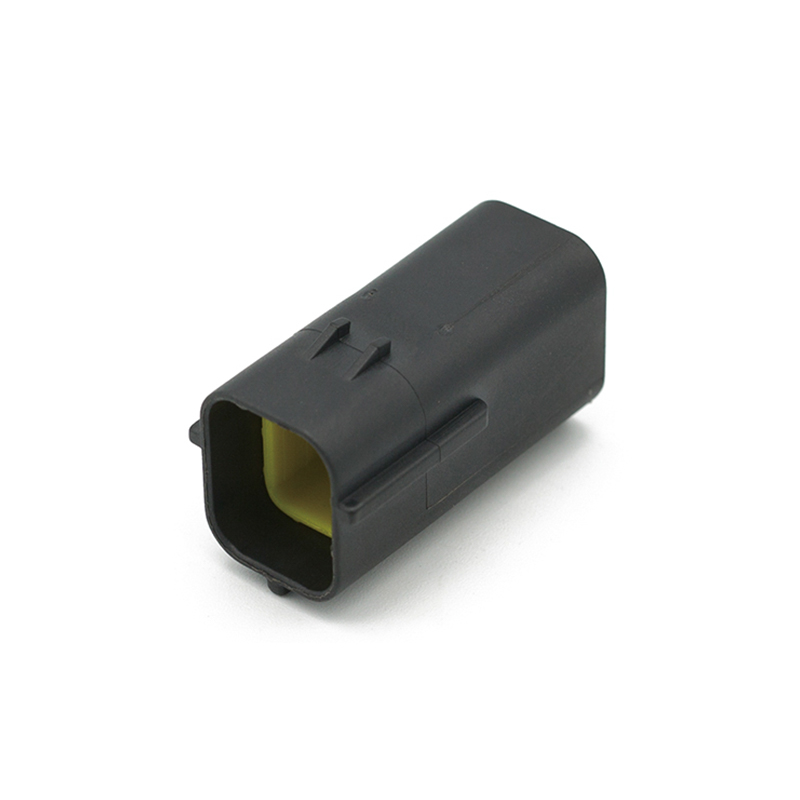
The plastic housing holds the terminals in their intended positions and provides electrical isolation between adjacent contacts. With a 1.0mm Pitch Connector, the smaller spacing means the housing must maintain accurate cavities and walls without compromising mechanical strength.
Injection molding is commonly used for this type of connector housing. Mold dimensions need to remain stable because variations in cavity size or terminal positioning can affect assembly accuracy.
Lizone Connector Technology Co., Ltd. produces PCB connector products using processes that combine molded insulating components with precision metal terminals. For fine-pitch products, the relationship between the housing and terminal dimensions is particularly important because both parts have to align during final assembly.
Automated Assembly Influences Connector Development
As PCB production becomes increasingly automated, connector manufacturers also need to consider how components behave during placement and soldering. Connectors may need features that support accurate positioning on the board and stable handling by assembly equipment.
A 1.0mm Pitch Connector therefore has to function as part of a larger manufacturing process rather than as an isolated component. Pin alignment, mounting structure, solderability, and dimensional consistency can all influence how smoothly the connector moves through PCB assembly.
This is especially relevant for high-volume electronics, where small variations can become significant when thousands of boards pass through the same production line.
Miniaturization Does Not Remove Reliability Requirements
Reducing connector size does not reduce the need for stable electrical and mechanical performance. Compact devices may operate for long periods with connectors exposed to vibration, temperature changes, and repeated electrical loads.
Manufacturers consequently need to balance contact density with mechanical strength. A smaller housing cannot simply be produced by reducing every dimension proportionally. Terminal retention, mating force, insulation performance, and board mounting strength still have to be considered.
The development of the 1.0mm Pitch Connector reflects this broader challenge in electronics manufacturing. More connections are being placed into smaller spaces, but the connector still has to provide dependable electrical paths and consistent mechanical engagement.
As PCB layouts continue to become denser, fine-pitch connectors will remain closely tied to the industry's miniaturization efforts. The 1.0mm format represents a practical point between connection density and manufacturability, while advances in molding, metal stamping, plating, and automated inspection continue to support smaller and more precise PCB interconnect systems.