
 English
 русский
 Español
 عربى
عربى 简体中文
简体中文3-Way Plug Assembly for Automotive Harness Connections
Connector Position Is Only the Starting Point
Automotive wiring harnesses connect electrical components through organized wire branches, terminals, and connector interfaces. A 3-Way Plug Assembly provides three contact positions within one housing, creating a defined connection point between compatible parts. Its function within a harness depends on the circuit layout and the specifications of the selected connector.
Position count alone does not establish whether a connector fits a particular application. Engineers also review the mating component, wire gauge, contact rating, mounting arrangement, and available space. Two connectors with three positions may differ in dimensions, pitch, electrical limits, or termination style.
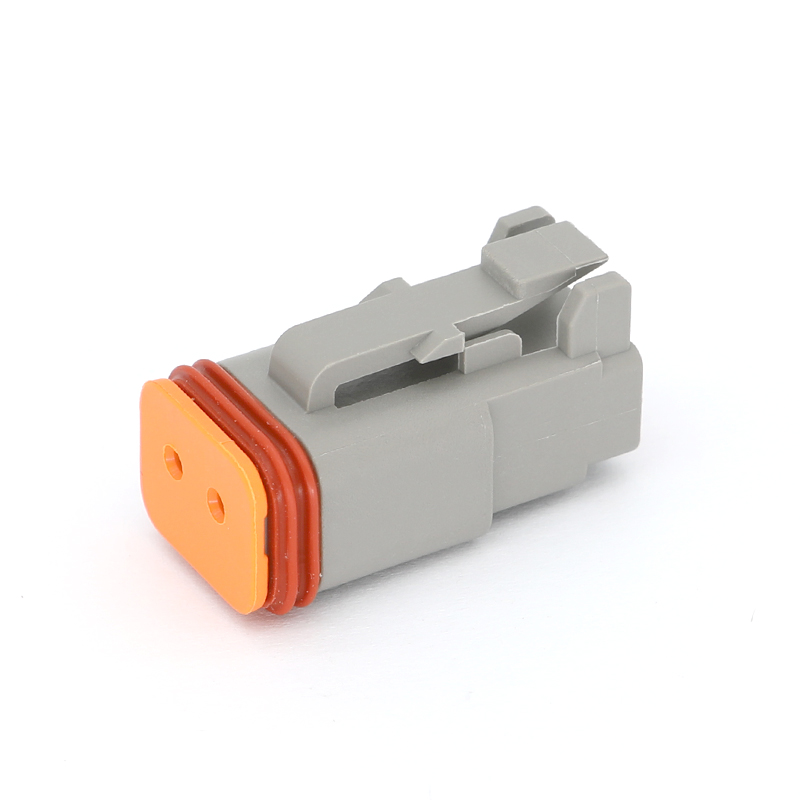
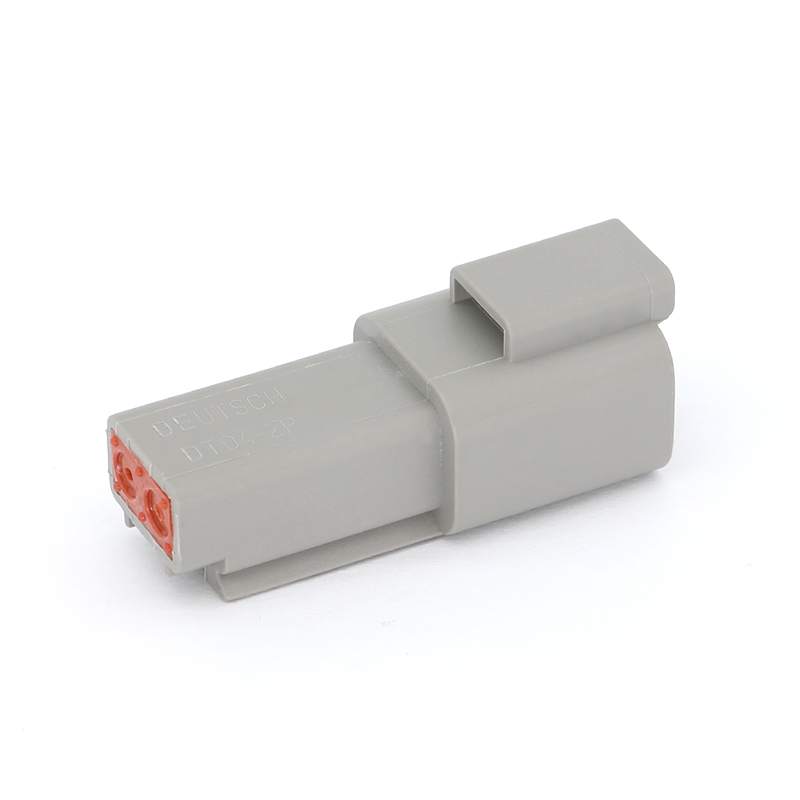
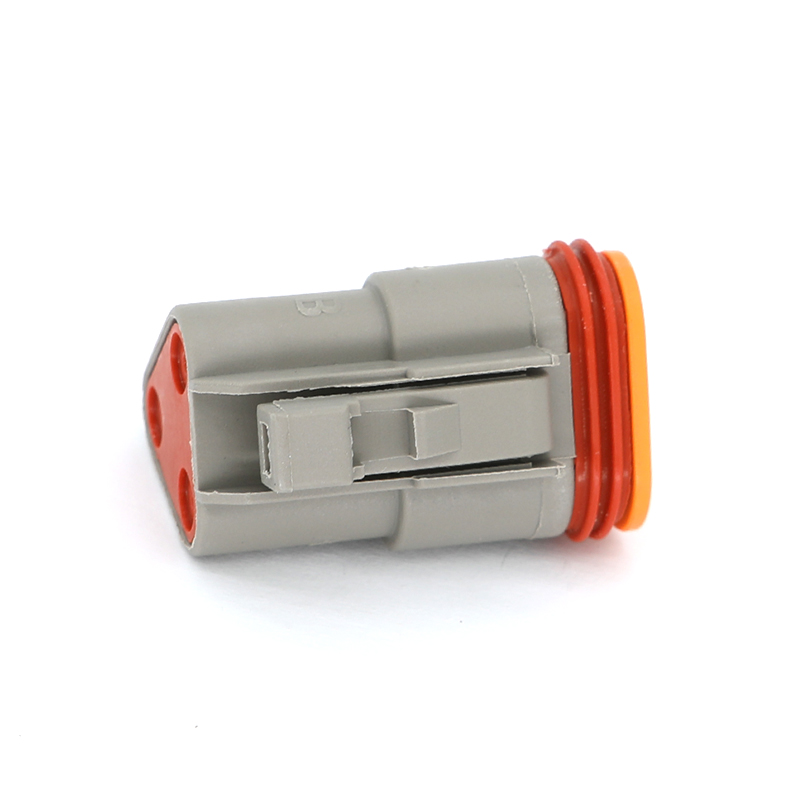
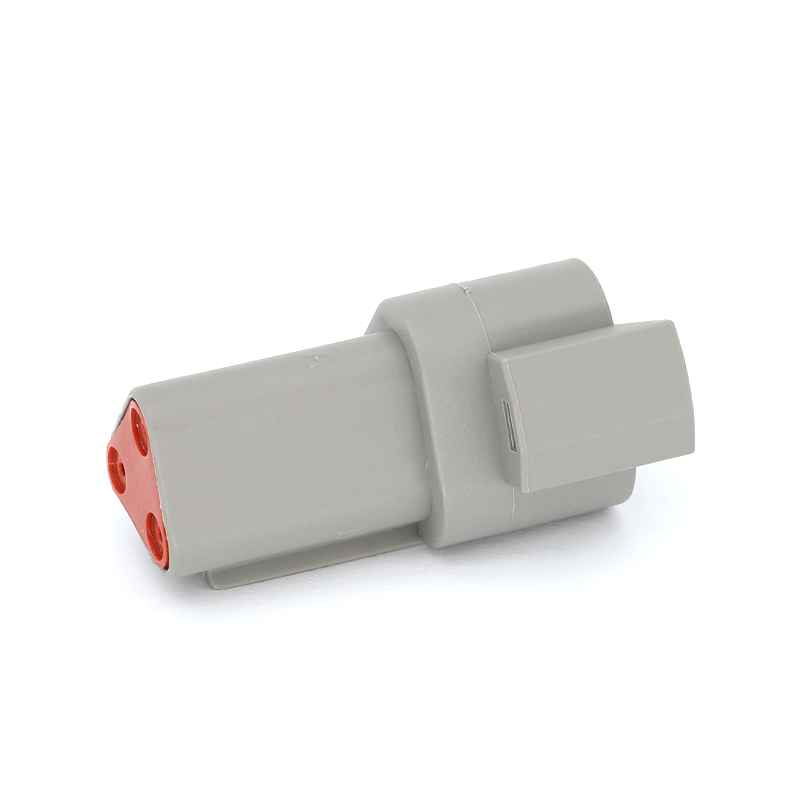
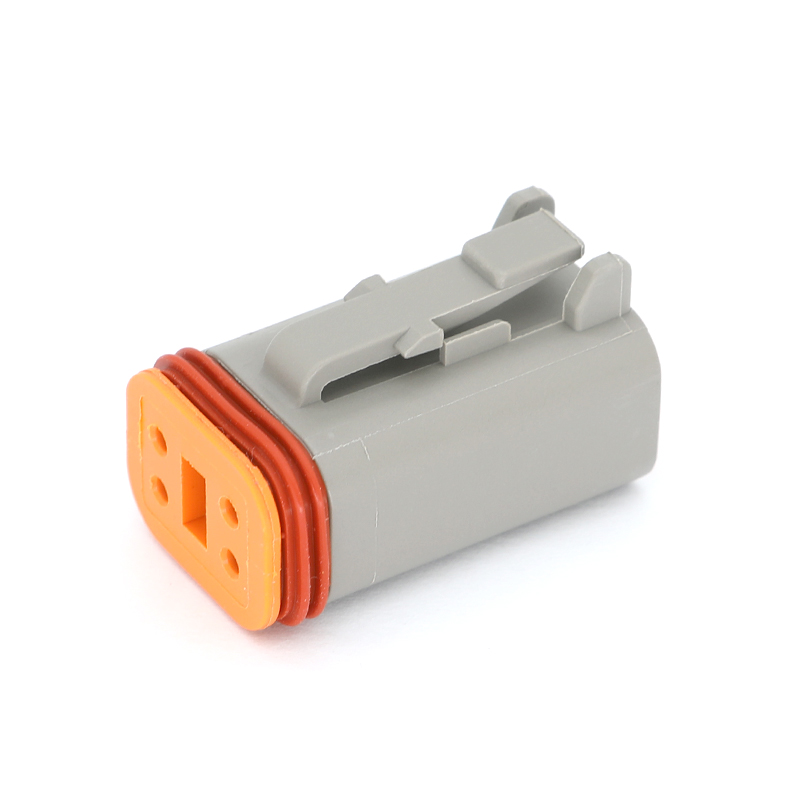
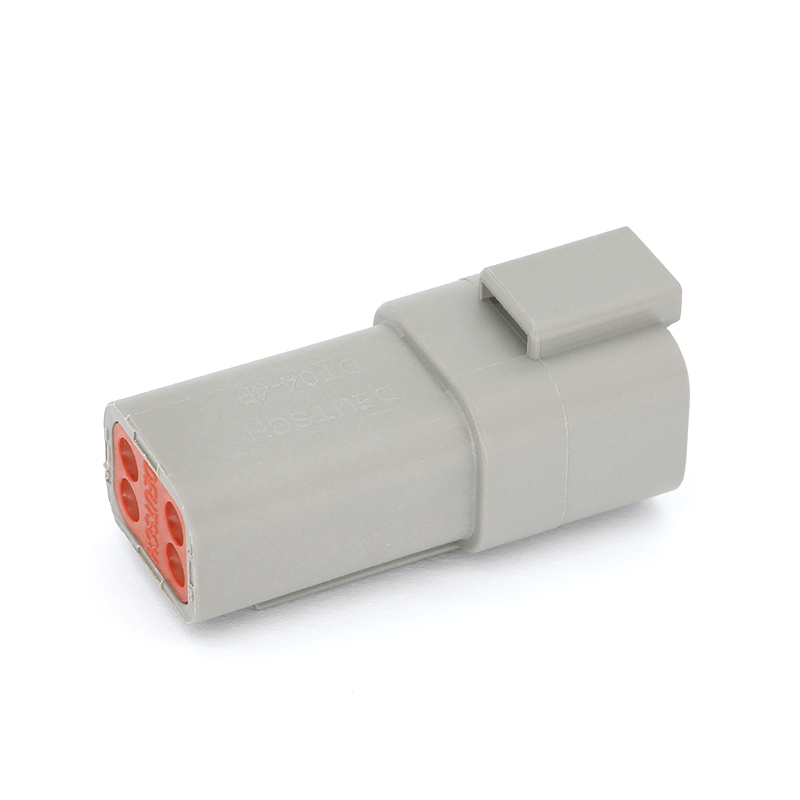
Lizone’s automotive connector range includes the DT06-3S three-position female plug and the DT04-3P three-position male receptacle. Both are listed for wire-to-wire applications, cable mounting or free-hanging installation, and crimp termination. These model details offer a useful example of how connector selection relates to harness planning.
Mating Components Affect Installation Space
The DT06-3S plug measures 28.5 × 18 × 20 mm, while the DT04-3P receptacle measures 43.5 × 21 × 25 mm. Both have a listed pitch of 5.46 mm and a straight mounting angle. The difference in overall dimensions can affect the space required around a completed connection.
When specifying a 3-Way Plug Assembly, harness drawings should identify both mating halves rather than showing only the plug-side component. This helps production and purchasing teams confirm which parts belong together. It also gives designers a clearer view of the space occupied by the connected pair.
Both models are listed as cable-mounted or free-hanging connectors. Their placement therefore relates directly to the wire route and the access available for mating or separation. The automotive connector should be considered as part of the harness layout, especially where several branches or nearby components share limited installation space.
Electrical Ratings Must Match the Selected Model
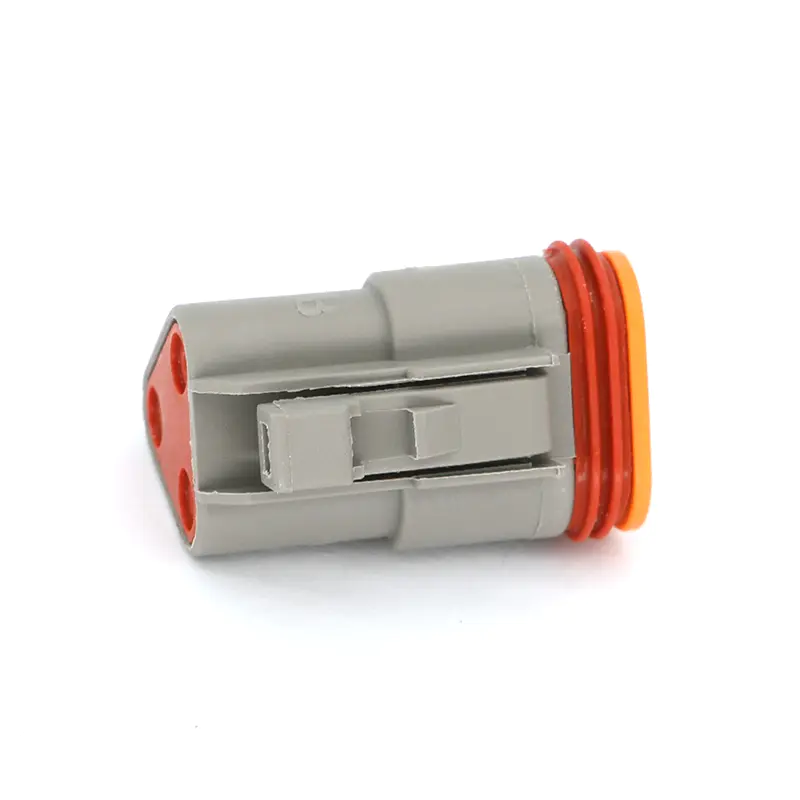
The DT06-3S and DT04-3P specifications list a 13 A contact current rating and a 250 V voltage rating. Their stated wire range is 14–20 AWG, and both use crimp termination. These figures apply to the listed models and should not be assumed for every three-position connector.
A 3-Way Plug Assembly should be selected by comparing its documented ratings with the circuit requirements and wire specification. The terminal, conductor, and crimp connection also need to be compatible. A connector’s position count does not indicate its electrical capacity, so the full model data remains important during technical review.
Product identification supports this process. Lizone lists the DT06-3S as LZ7033D-1.6-21 and the DT04-3P as LZ7033D-1.6-11. Including the complete model number in purchasing documents and harness records helps distinguish the plug from its matching receptacle and from other products in the same category.
Housing Features and Environmental Conditions
The listed connectors have polyamide housings, integrated locking mechanisms, and ingress protection ratings of IP68 and IP6K9K. Their stated operating temperature range is -55°C to +125°C. These specifications can be reviewed against the conditions expected at the connector’s installation point.
The locking feature forms part of the mating interface. Its position and accessibility may matter when a connector sits near a bracket, enclosure, or another wire branch. Harness planning should account for the physical space needed to connect and disconnect the parts during assembly or service.
Ingress protection ratings describe the specified connector product, not automatically the complete harness installation. The mating parts, terminals, wire sealing details where applicable, assembly, and installation conditions also affect the finished connection. For this reason, the selected 3-Way Plug Assembly should be assessed as one component within the larger electrical system.
Crimp Termination and Production Records
Crimp termination connects the contacts to the wires. For the DT06-3S and DT04-3P, the listed wire range is 14–20 AWG. Production documentation should identify the chosen terminal and wire specification so the assembly process can follow the requirements for those components.
The connector housing alone does not establish whether a completed termination is suitable. The terminal, conductor, and crimp tooling must be compatible. Clear part identification also helps production teams trace which connector model belongs at a particular harness location.
For an automotive connector used in a wire-to-wire application, records can separate position count, mating gender, pitch, mounting style, wire range, and product number. These details describe different properties. Keeping them distinct makes it easier to review a component change or identify a replacement part.
Organizing Connector Options by Specification
Connector ranges may include products with the same position count but different dimensions, pitches, wire ranges, or ratings. Organizing a 3-Way Plug Assembly by series, mating configuration, mounting style, and electrical specifications provides more useful information than grouping products by position count alone.
For distributors and harness manufacturers, consistent product records can support purchasing, assembly planning, and replacement-part identification. The complete model data provides a shared reference for reviewing whether a proposed connector matches the intended application.
As vehicle wiring layouts use different component interfaces and branch arrangements, connector specifications remain part of the harness design record. The 3-Way Plug Assembly is defined not only by its three positions, but by its mating half, dimensions, pitch, termination, wire range, ratings, and installation characteristics.