
 English
 русский
 Español
 عربى
عربى 简体中文
简体中文High Speed Board To Board Connector: Managing Signal Integrity
Two boards stacked a few millimeters apart look like a simple mechanical problem until the signal running between them starts degrading at higher frequencies. That's where connector selection stops being a mounting question and becomes an electrical one. A High Speed Board To Board Connector has to move data reliably across that short gap without introducing the noise, crosstalk, or impedance mismatch that slower interconnects can tolerate.
Pitch Size Determines More Than Physical Fit
Buyers comparing a High Speed Board To Board Connector across suppliers often start with pitch size — the spacing between contact pins — because it dictates how many circuits can fit in a given board footprint. A tighter pitch packs more contacts into less space, which matters for compact consumer electronics, but tighter spacing also increases the risk of crosstalk between adjacent signal paths at higher data rates. Suppliers offering a range of pitch options, from sub-millimeter spacing up to several millimeters, let buyers balance density against signal isolation based on the specific application rather than defaulting to whichever pitch the factory happens to stock.
Contact Design and Mating Reliability
A wire-to-board connector intended for repeated mating cycles needs contact geometry engineered for consistent wiping action, since a contact that only makes reliable connection on initial insertion isn't suitable for equipment that gets serviced or reconfigured in the field. Gold or gold-flash plating over a nickel underlayer is common on contact surfaces destined for low-signal-loss applications, since it resists oxidation better than bare copper alloys and keeps contact resistance stable across the connector's rated mating-cycle life. Buyers should request mating-cycle test data specific to the contact plating used, rather than accepting a generic durability claim that doesn't specify how many insertion cycles were tested.
Comparing Connector Types by Application Fit
|
Connector Type |
Typical Use Case |
Key Selection Factor |
|
Board-to-Board |
Stacked PCB assemblies |
Mating height and pitch |
|
Wire-to-Board |
Cable harness to circuit board |
Wire gauge compatibility |
|
Wire-to-Wire |
Inline cable splicing |
Housing lock mechanism |
Buyers designing compact, multi-board assemblies typically prioritize board-to-board configurations for their low mating height, while buyers connecting external cable harnesses to a control board lean toward wire-to-board designs matched to their wire gauge. Either configuration can be produced as a High Speed Board To Board Connector family sharing common contact plating and housing material, which simplifies qualification testing across a mixed product line.
Certification and Environmental Compliance
Export-ready production of a High Speed Board To Board Connector typically includes RoHS compliant connector documentation confirming the absence of restricted substances such as mercury, which matters for buyers shipping into markets with strict environmental import regulations. Beyond material compliance, buyers sourcing a High Speed Board To Board Connector for automotive or industrial applications should request environmental testing data covering vibration resistance and temperature cycling, since a connector validated only for stable indoor conditions may not hold contact integrity under the vibration profile of a vehicle engine bay. Quality assurance documentation specific to the production batch under quote gives buyers a clearer picture than a general company-level certificate covering unrelated product lines.
Customization Options for OEM Programs
Buyers running OEM programs often need pin configurations, housing colors, or mounting orientations that fall outside a supplier's standard catalog. A PCB header connector line built with modular tooling can typically accommodate custom pin counts without a full retool, since the base housing and contact stamping process stay constant while only the pin count and spacing change. Buyers should confirm during initial sourcing conversations whether a requested customization uses existing tooling or requires new mold development, since the latter significantly extends both cost and reduce time for an early production run.
Quality Control Before Bulk Production
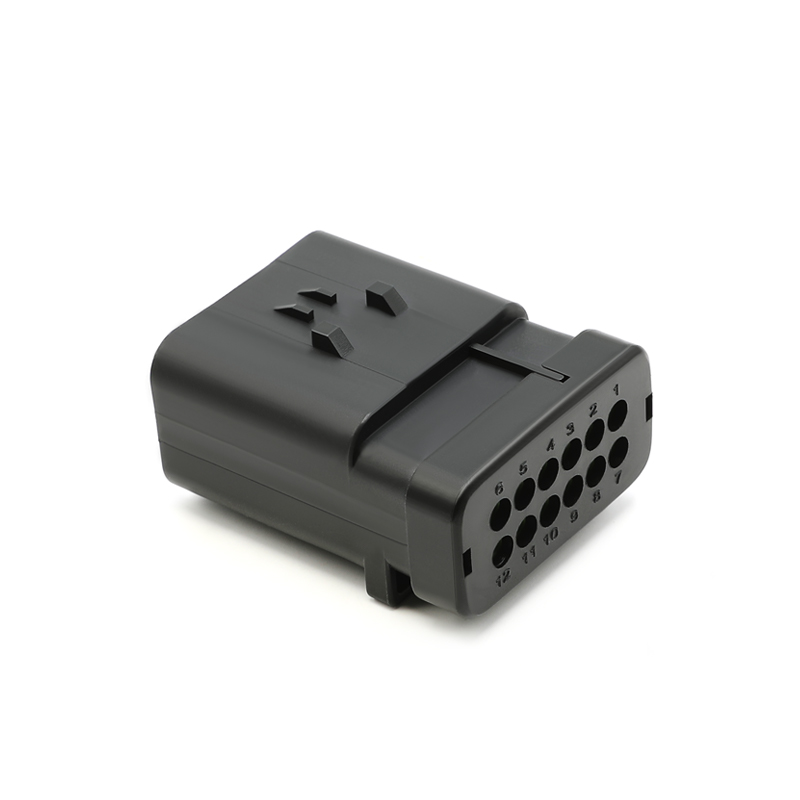
Before committing to a full container order of a signal integrity connector for a new design, buyers should request pre-production samples of the High Speed Board To Board Connector under consideration tested under the actual mating cycle, insertion force, and environmental conditions their end product will experience. Precision engineering claims mean little without batch-specific test records, and a factory that documents dimensional tolerance checks and continuity testing across each production run gives buyers a stronger basis for comparing suppliers than marketing language alone.